
Bagworms have been spotted in our neighborhood this summer. This specie of caterpillar has already killed one arborvitae evergreen tree and severely damaged several others. There are about 30 homes with arborvitaes on their property, mostly in the front beds. Up until this growing season, these bagworms have kept away from our neighborhood. If you have arborvitaes on your property and would like to learn more about treating for bagworms in the event of an infestation, please read further.
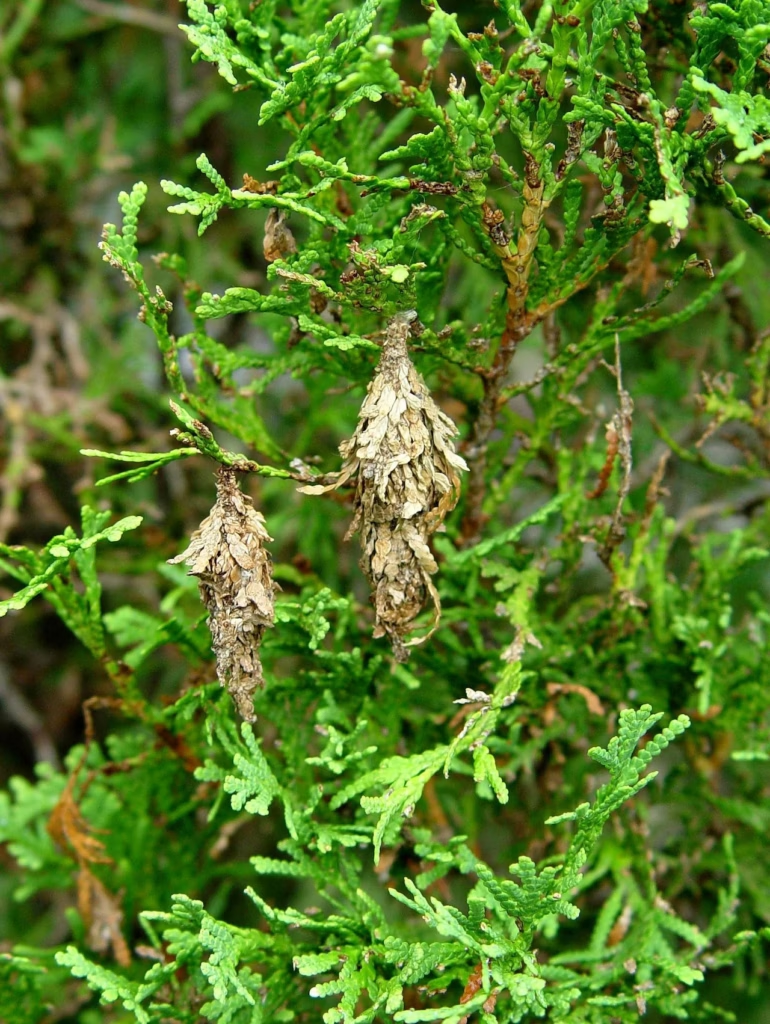

Bagworms can be a serious pest for arborvitae, potentially causing significant defoliation and even death of branches or entire trees if left unchecked. These caterpillars construct protective bags, which they attach to plants, and feed on needles or leaves. Early detection and removal of the bags, along with targeted insecticide treatments, are crucial for controlling bagworm infestations on arborvitae. (Source: Google AI)
Understanding the Problem:
What are bagworms?
Bagworms are caterpillars that construct protective bags made of silk and plant debris.
Why are they a problem for arborvitae?
Arborvitae, being evergreens, cannot produce new leaves to replace those consumed by bagworms, making them more vulnerable to damage.
How do they damage arborvitae?
Young bagworms initially feed on the leaf surface, creating small holes. Older larvae can consume entire needles or leaves.
Where are bagworms found?
While bagworms are native to North America, they are most commonly found in the eastern half of the United States, particularly on arborvitae and junipers.
Will Brightview treat my arborvitae if infested?
Yes, our HOA contract with Brightview does include treatment for insects or pests on trees or shrubs. We’ve had occasional invasions of army worms in the past few years, and we incrementally paid for those treatment services. Army worms will eat an entire lawn within 24-48 hours if left unchecked.
Controlling Bagworms on Arborvitae:
Early Detection:
Inspect your arborvitae regularly for the presence of bags, especially during the growing season.
Mechanical Control:
Hand-picking and destroying the bags during fall, winter, or spring is an effective method for smaller infestations.
Biological Control:
Bacillus thuringiensis (Bt), a bacterial insecticide, can be effective against young bagworms, but it needs to be applied by mid-July.
Chemical Control:
Registered insecticides containing spinosad or permethrin can be used but always follow label instructions.
Timing is Crucial:
Insecticide applications are most effective when targeted at young, actively feeding larvae.
Consider Professional Help:
If the infestation is severe or you’re unsure about treatment options, consulting with a local pest control professional is recommended.

Homeowners have had good success using SEVIN insecticide to kill bagworms. There’s a ready-to-use version as well as a concentrate. The important thing is to catch and treat any infestation early. Multiple applications will be necessary before bare spots will begin to recover.